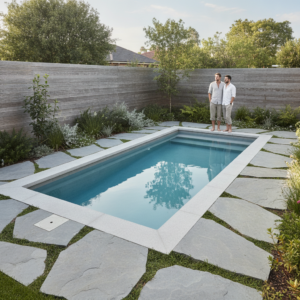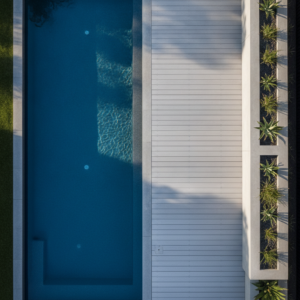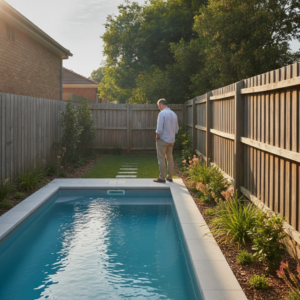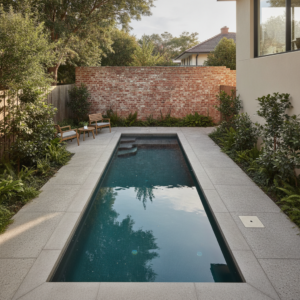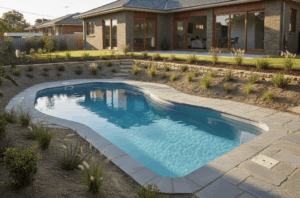


If you’re a Melbourne homeowner with a compact backyard, the idea of a plunge pool small backyard Melbourne solution has probably crossed your mind. The appeal is obvious: a refreshing dip without the sprawl of a full-sized pool. But before you commit to installation, it’s worth understanding exactly what a plunge pool offers, what it doesn’t, and whether it genuinely fits your lifestyle and property constraints.
Many inner Melbourne properties—whether in Camberwell, Bentleigh, Glen Iris, or Brighton—have limited outdoor space. A typical suburban block might offer only a modest courtyard or rear garden. In these settings, a plunge pool can seem like the perfect compromise. Yet the reality is more nuanced. Some homeowners discover that a plunge pool works brilliantly for their situation. Others find that a different compact pool option, or even a spa, would have served them better.
This guide walks you through the practical considerations that matter: space requirements, cost, maintenance, lifestyle fit, and Melbourne’s specific climate challenges. By the end, you’ll have a clearer picture of whether a plunge pool truly suits your needs.
What Exactly Is a Plunge Pool?
A plunge pool is a small, shallow swimming pool designed primarily for cooling off and leisure rather than lap swimming or serious exercise. The term “plunge” reflects its core purpose: a quick immersion to beat the heat, followed by sitting poolside with family or guests.
Typical plunge pool dimensions range from 2 to 4 metres in length and 1.5 to 2.5 metres in width, with depths commonly between 1 and 1.5 metres. Some are even more compact—closer to a large spa in footprint. The water volume typically sits between 4,000 and 15,000 litres, depending on dimensions.
This distinguishes a plunge pool from what’s often called a “small pool” or lap pool alternative, which might stretch to 5–6 metres and accommodate basic lap swimming. It also differs from a spa, which is typically smaller, hotter, and designed for hydrotherapy rather than swimming.
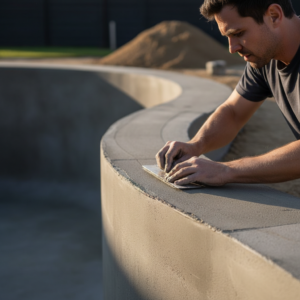
Plunge pools come in two main construction types: custom concrete designs (offering flexibility in shape and integration with landscaping) and prefabricated fibreglass shells (quicker installation, contemporary designs, predictable costs). Melbourne builders offer both, tailored to the site conditions and aesthetic preferences of inner Melbourne blocks. If you’re exploring options, a plunge pool builder Melbourne can guide you through these choices.
Backyard Pool Space Requirements and Melbourne Council Setbacks
Before measuring your outdoor area, understand that Victoria’s planning guidelines and individual council requirements will shape what’s legally possible. This isn’t just about physical fit—it’s about compliance.
Typical Space Footprint
A plunge pool itself occupies roughly 4–10 square metres of ground. However, council setback requirements typically demand a buffer between the pool and your property boundaries. In many Melbourne suburbs, including Camberwell, Bentleigh, Glen Iris, and Malvern, standard setbacks are around 1 metre from side boundaries and 2 metres from rear boundaries, though these vary by municipality.
Beyond the pool shell, you’ll need functional space for:
- Decking or paving around the pool (typically 1–1.5 metres on most sides)
- Equipment housing (pump, filter, heater—roughly 1–2 square metres of discrete space)
- Access for cleaning and maintenance
- Safe egress in case of emergency
Realistically, a plunge pool project on an inner Melbourne block often requires a total dedicated area of 15–25 square metres. If your backyard is significantly smaller, or if boundary setbacks eat substantially into available space, a plunge pool may not be practical. For detailed guidance on space utilisation, explore building a pool in a very small backyard Melbourne.
Council Permits and Planning Approval
All pools over a certain volume (typically 10,000 litres in Victoria) require building approval and may trigger planning permit applications, particularly in heritage areas or if your property is non-compliant with existing setbacks. Smaller plunge pools sometimes fall below these thresholds, but this is not automatic. Your local council in suburban Melbourne will have specific guidelines. For instance, properties in Gisborne or the Mornington Peninsula may have different requirements than inner city Camberwell.
Before committing budget to design, speak with your local council or engage a builder familiar with local regulations. This step clarifies what’s legally possible on your block.
Plunge Pool vs Small Pool: The Key Differences
The choice between a plunge pool and other compact pool options is often misunderstood. Here’s what genuinely separates them.
Purpose and Use
A plunge pool excels at cooling off during summer and creating a focal point for entertaining. You’ll spend time wading, lounging poolside, and enjoying the aesthetic. If you want to swim laps, do water aerobics, or teach children to develop serious swimming technique, a plunge pool falls short. The depth and length don’t support these activities comfortably.
A small fibreglass pool or compact concrete pool (5–7 metres long) allows modest lap swimming and more dynamic water activity. If active use is part of your vision, this matters. For specific guidance on layouts suited to narrow properties, consider reviewing best pool layouts for narrow Melbourne blocks.
Installation Timeline and Cost Variability
Fibreglass plunge pools often install faster—sometimes within weeks—because the shell arrives pre-manufactured. Concrete plunge pools require excavation, form-work, concrete pouring, curing, and finishing, stretching the timeline to several months. Both approaches work; the choice depends on site access, budget, and aesthetic preference.
Aesthetic Integration
Concrete pools adapt to your landscape design. Custom shapes, integrated spillover spa features, and finished materials can be tailored to match your home’s architecture and garden aesthetic. Fibreglass pools offer clean lines and contemporary finishes but less design flexibility.
For properties in heritage-conscious suburbs or those with distinctive landscaping, concrete often feels more integrated. For modern renovations or time-sensitive projects, fibreglass presents a practical alternative. A custom pool design for small backyards Melbourne can help you explore both directions.
Plunge Pool Installation Cost: What You Should Expect
Cost is often the decisive factor. Understanding realistic pricing helps you compare plunge pools against other compact pool options and decide where your budget is best invested.
Typical Installation Range
A concrete plunge pool in Melbourne typically costs between $25,000 and $50,000, depending on dimensions, finishes, site conditions, and equipment specification. Fibreglass plunge pools often range from $20,000 to $40,000. These figures include the pool structure, basic equipment (pump, filter), and installation labour. They do not typically include extensive decking, heating systems, or high-end automation.
Site factors significantly affect cost. If your block requires extensive excavation, soil removal, or drainage work, prices climb. Inner Melbourne blocks with challenging access or congested landscaping often incur higher costs than suburban properties with straightforward installation.
What's Included and What Isn't
Base pool installation covers the shell, circulation equipment, and essential water treatment. It typically does not include:
- Heating systems (solar, gas, or heat pump installations add $3,000–$12,000)
- Premium decking or landscaping ($5,000–$20,000+)
- Automated cleaning systems (robotic cleaners add $1,500–$5,000)
- Covers, fencing, or safety features ($2,000–$8,000)
Total project cost often reaches $40,000–$70,000 once you add realistic finishing touches.
How Plunge Pools Compare to Other Compact Options
A small concrete or fibreglass lap pool (5–7 metres) typically costs $35,000–$65,000 to install—not dramatically more than a plunge pool, but offering greater versatility in use. A dedicated pool spa combination ranges from $8,000–$25,000 for the spa alone, depending on size and features. Some homeowners find that a spa paired with investment in landscaping and entertainment space delivers better lifestyle value than a plunge pool alone.
The cost comparison depends on what you’re genuinely trying to achieve. If cooling off and entertaining are priorities, a plunge pool’s cost-to-satisfaction ratio can be strong. If you value active swimming or multi-purpose use, spending slightly more on a small lap pool may prove more satisfying long-term.
Maintenance and Running Costs: The Ongoing Picture
Installation cost is only the beginning. Plunge pools carry ongoing maintenance and operating expenses that influence the true cost of ownership.
Water Treatment and Circulation
A plunge pool requires the same fundamental water treatment as any swimming pool: circulation through a filter, chemical balance (chlorine or salt-based systems), and regular testing. The smaller water volume (typically 4,000–15,000 litres) means you use less chemical and consume less electricity for circulation than a full-sized pool. This is a genuine advantage.
However, smaller pools can be more sensitive to chemical imbalance. A mistake or period of neglect affects the entire body of water more quickly. Homeowners new to pool maintenance sometimes underestimate this.
Blue Pools and Spas can help you select appropriate filtration and water treatment systems—whether a traditional chlorine approach or a Naked Freshwater unit suited to your plunge pool’s volume—ensuring that maintenance remains manageable for your situation.
Heating in Melbourne's Climate
This is crucial. Melbourne’s winters are cool, and plunge pools don’t retain heat as effectively as larger bodies of water. Without heating, your plunge pool may be unusable from June through August. With heating, you extend the season substantially. For detailed insights on heating and design tailored to Melbourne, explore our guide on Melbourne’s climate suitable for a pool heating usage and design tips.
Solar heating is effective in Melbourne’s summer but less reliable in winter. Gas heating provides consistent warmth but carries fuel costs. Heat pumps offer a middle ground—efficient and reliable, though with an initial investment of $4,000–$8,000.
Budget realistically for heating. Many Melbourne homeowners find this the difference between a pool used nine months of the year versus four.
Cleaning and Maintenance Labour
Weekly brushing, vacuuming, and skimming are standard. The smaller surface area of a plunge pool means less physical maintenance than a large pool, but routine effort remains necessary. Some homeowners invest in robotic or pressure cleaners (reducing manual work) or engage professional services ($50–$150 monthly).
Seasonal opening and closing also apply. Factoring in your time or contracted services, annual maintenance costs typically range from $500–$2,000, depending on how much you do yourself.
Lifestyle Fit: Is a Plunge Pool Right for You?
Beyond numbers, the practical question is whether a plunge pool aligns with how you actually live.
When a Plunge Pool Works Well
A plunge pool is an excellent fit if you:
- Have limited outdoor space (typical inner Melbourne blocks) and want a water feature that doesn’t dominate the yard
- Prioritise cooling off and relaxation over serious swimming or fitness activity
- Entertain regularly and want a focal point that encourages guests to linger outdoors
- Are willing to invest in heating for extended seasonal use
- Appreciate the aesthetic and prestige of a custom outdoor feature
- Have patience for routine maintenance or budget for professional services
Homeowners in Camberwell, Glen Iris, or Bentleigh with compact properties, who value entertaining and can commit to seasonal maintenance, often find plunge pools genuinely rewarding.
When a Plunge Pool May Disappoint
Conversely, consider alternatives if:
- You have young children who need space to play safely in water (a small lap pool or large spa might be better suited)
- You want to swim regularly for fitness or teaching skills
- Your backyard is extremely small or heavily constrained by council setbacks
- You’re budget-constrained and can’t afford heating (resulting in a seasonal-only feature)
- You prefer low-maintenance options (a spa requires less chemical management than a plunge pool in many cases)
- You’re uncertain about committing 15–25 square metres of outdoor space long-term
Honest self-assessment here matters. Too many homeowners install plunge pools with optimistic expectations, only to find they’re underused or maintained sporadically.
Melbourne's Climate and Seasonal Considerations
Melbourne’s climate shapes the practicality of your plunge pool investment in specific ways.
Summer Use and Cooling Value
Melbourne summers (December–February) offer extended warm weather. A plunge pool delivers genuine relief during heat waves—invaluable on 35°C+ days. The cooling value and social benefit are substantial during summer months. Many homeowners find this the pool’s strongest value proposition.
Winter Challenges
Winters are mild by global standards but cool enough that an unheated plunge pool becomes unusable. Water temperatures drop to 10–15°C, making casual swimming uncomfortable. This is where heating becomes essential, not optional. Without it, your plunge pool sits mostly dormant from June through August.
Properties in the Mornington Peninsula or Gisborne, slightly further south, experience marginally cooler winters than inner Melbourne suburbs. These properties benefit even more from heating investment.
Spring and Autumn Transition Periods
March through May and September through November offer comfortable water temperatures if heated. These shoulder seasons can be when your plunge pool is most actively used—weather is pleasant, and water temperature is manageable.
Alternative Solutions if a Plunge Pool Doesn't Fit
If your assessment suggests a plunge pool isn’t the right choice, several alternatives merit consideration.
Small Lap Pool or Compact Fibreglass Pool
A 5–6 metre fibreglass or concrete pool costs only moderately more than a plunge pool but offers lap swimming capability and greater versatility. The space requirement is larger, but if your backyard can accommodate it, the utility often justifies the extra footprint.
Spa Installation
A dedicated spa (1.5–2 metres in diameter, 800–1,500 litres) requires less space, costs $8,000–$20,000, and offers hydrotherapy benefits alongside social use. Water heating is built into most spa designs, and maintenance can be simpler. For entertaining and relaxation without active swimming, a spa can outperform a plunge pool.
Pool and Spa Combination
Increasingly, Melbourne homeowners combine a compact plunge pool with an adjacent spa. This approach provides cooling relief alongside therapeutic warmth—useful for winter entertaining and all-season appeal. Shared equipment can reduce overall cost and footprint compared to two separate installations.
Splash Pool or Wading Pool
For families with young children or those with severely limited space, a shallow splash pool (0.6–0.9 metres deep, 2–3 metres wide) offers water play without the depth or cost of a plunge pool. These are simpler to maintain and less strictly regulated.
Investment in Landscaping and Entertaining Space
Not every Melbourne homeowner needs a water feature. For some, investing in quality hardscaping, shade structures, and entertaining zones delivers more lifestyle value than a plunge pool. This is a legitimate choice, particularly on very small blocks or with limited budgets.
Working with a Melbourne Pool Builder to Assess Your Situation
The right decision emerges from an honest conversation about your space, budget, lifestyle, and expectations. This is where professional builders prove valuable.
Blue Pools and Spas works with Melbourne homeowners to assess whether a plunge pool genuinely suits their needs. This includes site evaluation (space, council compliance, soil conditions), cost estimation that reflects your property’s specifics, and candid discussion of maintenance realities and seasonal limitations.
If a plunge pool isn’t the optimal fit, that conversation includes exploring alternatives—whether a small concrete pool, a spa, or a combined solution. The goal is clarity and confidence before construction begins, not aggressive promotion of any single option.
Many properties benefit from a professional site assessment. Council setback rules, soil conditions, drainage considerations, and integration with existing landscaping all influence both feasibility and cost. What works for a Bentleigh block may not translate directly to a Glen Iris property or a Mornington Peninsula residence.
Making Your Decision
A plunge pool can be an excellent addition to a Melbourne home with limited space, strong entertaining priorities, and appreciation for the aesthetic and cooling relief a water feature provides. But it’s not universally the right choice. The decision hinges on honest assessment of your space constraints, budget (including heating), lifestyle use, maintenance commitment, and seasonal expectations.
If a plunge pool aligns with these factors, the installation process and ongoing ownership can be genuinely rewarding. If it doesn’t, exploring alternatives—whether a small lap pool, spa, or enhanced landscaping—may deliver greater satisfaction.
Take time to clarify what you’re genuinely looking for in a backyard water feature. Discuss your situation with an experienced local builder. Visit other installations if possible. Only then commit to a direction.
FAQ
What size backyard do you need for a plunge pool in Melbourne?
A plunge pool itself occupies 4–10 square metres, but accounting for council setbacks (typically 1 metre from side boundaries and 2 metres from rear), decking, equipment housing, and access, you realistically need 15–25 square metres of dedicated space. This is roughly equivalent to a courtyard or modest rear garden. If your outdoor area is significantly smaller, or if boundary constraints are tight, a plunge pool may not be feasible. Your local council (whether Camberwell, Glen Iris, Bentleigh, or another Melbourne suburb) can confirm exact setback requirements for your property.
Are plunge pools cheaper than traditional pools in Melbourne?
Plunge pools typically cost $20,000–$50,000 to install, depending on whether you choose concrete or fibreglass construction and site conditions. This is less than a full-sized pool (often $50,000+) but only moderately cheaper than a small lap pool (typically $35,000–$65,000). Once you add heating (essential for Melbourne’s winters), decking, landscaping, and equipment upgrades, total project costs often reach $40,000–$70,000. The savings relative to larger pools are real but not dramatic. The value proposition depends on whether a plunge pool’s specific benefits (compact footprint, aesthetic, entertaining focus) justify its cost relative to alternatives for your situation.
What are the main differences between a plunge pool and a small lap pool?
A plunge pool (typically 2–4 metres long, 1–1.5 metres deep) is designed for cooling off and leisure entertaining. A small lap pool (5–7 metres long, 1.2–1.5 metres deep) accommodates modest lap swimming and more active water use. Plunge pools require less space and cost slightly less but limit functional activity. Small lap pools cost a bit more but offer versatility for fitness, teaching children to swim, and varied recreational use. The choice depends on whether cooling and entertaining are your priorities or whether active swimming matters to your household.
Can you heat a plunge pool in Melbourne’s climate?
Yes, and heating is strongly recommended for year-round use in Melbourne. Solar heating works effectively in summer but is unreliable in winter. Gas heating provides consistent warmth but carries ongoing fuel costs. Heat pumps offer efficiency and reliability, typically costing $4,000–$8,000 to install. Without heating, your plunge pool will be unusable from June through August when water temperatures drop to 10–15°C. With appropriate heating, you can extend usable months to nine or more per year, significantly improving the investment’s return in terms of actual use and enjoyment.