

Understanding Concrete Pool Construction as a Craft
Concrete pool construction is far more than a standardised building process. It represents a specialised discipline where technical knowledge, material expertise and careful execution converge to create a permanent feature that will serve a household for decades. The difference between a mediocre concrete pool and one that truly enhances a home often comes down to the quality of craftsmanship applied at every stage of design and installation.
When homeowners across Melbourne and throughout Melbourne and surrounding areas invest in a custom concrete pool, they are fundamentally choosing to partner with skilled professionals who understand that durability, aesthetic appeal and long-term performance depend on intentional detailing and proper material handling. A concrete pool is not a temporary structure—it is a bespoke addition to a property that demands precision from conception through to the final finish.
The Foundation of Quality: Material Selection and Preparation
Craftsmanship in concrete pool construction begins long before the concrete is poured. The selection of materials, the design of reinforcement systems and the preparation of the building site establish the foundation upon which the entire project depends. Skilled pool builders understand that concrete mix design is not arbitrary; it must be tailored to environmental conditions, local soil characteristics and the specific demands of the pool structure.
High-quality concrete pool construction requires careful consideration of concrete strength, water resistance and durability properties. The choice of reinforcement—whether steel rebar or mesh—must align with the pool’s dimensions, anticipated water pressure and the soil conditions of the particular site. Builders working across Bentleigh, Glen Iris, Malvern and Mornington must account for variable soil types, moisture levels and drainage patterns that differ significantly from region to region.
The excavation and base preparation phase determines how well the pool will resist settlement, cracking and structural stress over time. Professional craftsmanship at this stage means excavating to precise specifications, compacting soil appropriately and installing proper drainage systems that prevent water accumulation beneath the pool shell. These details are invisible once the pool is complete, yet they directly influence whether the concrete structure remains stable for fifteen, twenty or thirty years without significant repair.
Precision in Concrete Application and Curing
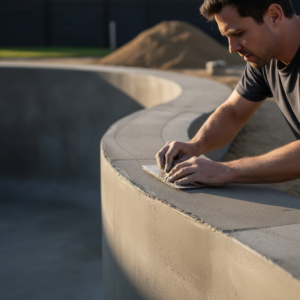
The actual pouring and placement of concrete represents one of the most critical phases of concrete pool craftsmanship in Victoria. The concrete must be applied with sufficient density to create a uniform, impermeable shell. This is not simply a matter of mixing concrete and filling a hole; it requires understanding concrete flow properties, proper vibration to eliminate air pockets and careful attention to timing and weather conditions.
Skilled concrete pool builders monitor concrete curing conditions closely. Concrete does not simply dry; it undergoes a chemical process that requires appropriate temperature, moisture and time to develop full strength. Rushing this process or allowing concrete to cure too quickly can result in surface cracking, reduced durability and compromised water tightness. Conversely, proper curing procedures protect against the internal stresses that develop during concrete hardening.
The thickness and uniformity of concrete application also reflects craftsmanship. Pool walls and floors must be thick enough to withstand hydrostatic pressure, but this thickness must be consistent. Thinner sections create stress concentration points where cracks are more likely to initiate. Uneven curing or variable concrete density can lead to differential settlement, hairline cracks and eventual water loss.
Detailing and Finishes: Where Craftsmanship Becomes Visible
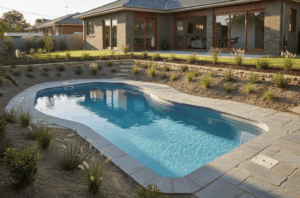
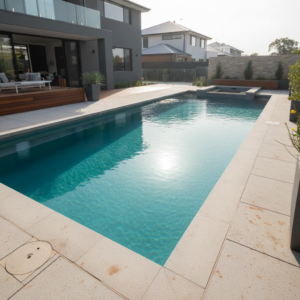
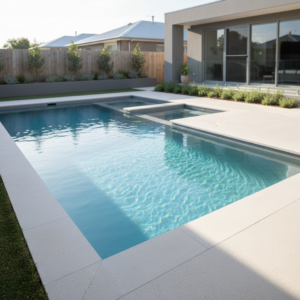
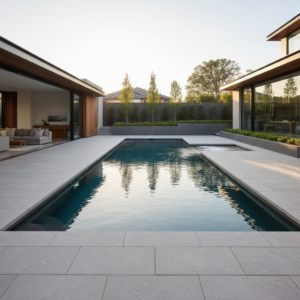
While structural integrity depends on hidden layers of preparation and execution, the visible details of a concrete pool reveal the true calibre of craftsmanship. Concrete pool detailing encompasses the interior finish, waterproofing layer, edge details and transition zones where the pool meets deck surfaces or integrated spa sections.
The interior finish of a concrete pool requires smooth, properly sealed surfaces that prevent algae growth, water loss and deterioration. Custom pool construction quality in Mornington and other Melbourne areas is often determined by whether the concrete surface is properly sealed with appropriate waterproofing systems. A bespoke pool finish goes beyond basic functionality; it creates a surface that is smooth to touch, consistent in colour and resistant to the chemical and physical stresses of pool water exposure.
Corner details, step construction and any integrated features such as benches or spa spillovers demand particular attention. These transition points are structurally complex and aesthetically prominent. Poor craftsmanship here results in visible cracks, water seepage or uneven surfaces. Quality workmanship produces clean lines, consistent radii and flawless transitions that enhance both safety and visual appeal.
Bespoke pool finishes often include decorative elements such as aggregate exposure, trowelled finishes or integrated LED lighting. These features require skilled execution and appropriate curing of special coatings or finishes. The difference between an amateur and professional approach is evident in the consistency and durability of these details.
Plumbing and Equipment Integration
Craftsmanship extends beyond the concrete shell itself to the integration of hydraulic systems. The placement of inlet and outlet ports, return lines and equipment penetrations must be precise and strategically positioned. Poor placement or incorrect sizing of these connections can result in inadequate circulation, dead zones in the pool where water stagnates and uneven chemical distribution.
Skilled pool builders coordinate concrete work with equipment specifications to ensure that pump and filter systems can be properly sized and installed. The relationship between pool volume, pipe sizing and circulation performance depends on these early-stage decisions. When a client is considering a pool and spa combination, the craftsmanship of integrating both structures with a single circulation system or separate heating systems requires careful hydraulic design and precise concrete placement.
The installation of water treatment systems—whether salt chlorination, chlorinators, electrolysers or injection systems—depends on properly positioned concrete work. Monitoring systems for pH, total alkalinity and total hardness require access points and sensor locations that must be anticipated during construction. These integrations are rarely visible but fundamentally influence how effectively a pool can be maintained over its lifetime.
Durability and Long-Term Performance
The true measure of concrete pool craftsmanship emerges over years and decades of use. A well-constructed concrete pool resists surface deterioration, maintains structural integrity despite hydrostatic pressure and remains watertight without costly repairs. A poorly executed pool may develop cracks, experience progressive water loss or show signs of reinforcement corrosion within five to ten years.
How workmanship affects durability is best understood through the lens of stress management. Concrete naturally experiences stress from water pressure, thermal expansion and contraction, ground settlement and chemical exposure. Expert craftsmanship anticipates these stresses through appropriate reinforcement design, strategic joint placement and proper material selection. When these elements are neglected, stress concentrates and failure accelerates.
The protective layers that prevent water loss and chemical corrosion depend on quality application and appropriate curing. Waterproofing membranes, sealants and protective coatings must be installed on properly prepared concrete surfaces. This requires cleanliness, proper surface preparation and careful application. Shortcuts in this phase directly reduce the expected lifespan of the pool’s protective systems.
Comparing Concrete Pools with Fibreglass Alternatives
Understanding the role of craftsmanship in concrete pool construction also requires contextualising this choice against alternatives. Fibreglass pools offer pre-manufactured consistency and rapid installation, but they cannot be customised to specific site conditions, landscape integrations or bespoke design preferences. Concrete pools demand more labour and attention to craft, but this investment creates truly tailored outdoor living spaces.
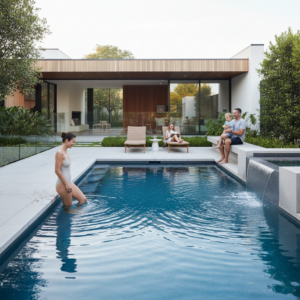
The decision between concrete and fibreglass often depends on whether a homeowner prioritises custom design or standardised efficiency. Concrete pool construction allows for irregular shapes, integrated spa sections, custom water features and bespoke finishes that reflect individual property aesthetics and functional requirements. This flexibility demands skilled craftsmanship at every stage.
Selecting Builders Who Understand Craftsmanship
Identifying truly skilled concrete pool builders requires looking beyond pricing and timelines to assess approach and attention to detail. Professional builders ask detailed questions about site conditions, drainage, soil composition and long-term maintenance preferences. They provide detailed specifications for concrete mix design, reinforcement layout and curing procedures. They coordinate equipment selection with concrete work to ensure optimal performance.