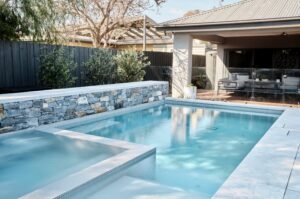


A custom swimming pool is not delivered in a single moment. It is shaped through a sequence of decisions that move a project from an initial idea to a finished, usable structure. Understanding this process helps clarify where quality is created, where risks are managed, and why early stages carry as much weight as the final finishes.
In a bespoke pool project, each phase builds on the one before it. When those phases are clearly defined and properly coordinated, the result is a pool that fits its site, performs as intended, and stands the test of time.
Design and site preparation: shaping the project
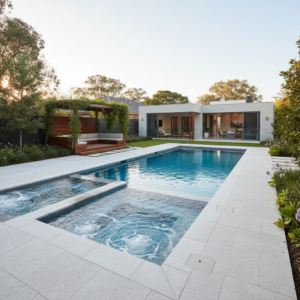
How people actually use a combined pool and spa space
The design and preparation phase is where the pool takes form conceptually and physically. This is not limited to aesthetics. It is about aligning the pool with the site, the intended use, and the realities of construction.
Defining the pool design around use, proportions, and features
At this stage, key design decisions are made. These include the overall shape, dimensions, depth profile, steps, and functional options. The goal is to define a pool that suits how it will be used, whether for family swimming, entertaining, or relaxation, rather than forcing a standard design onto the site.
These choices influence everything that follows, from structural requirements to equipment sizing.
Reading the site before drawing conclusions
Every site presents constraints and opportunities. Ground conditions, access, levels, and proximity to buildings all affect how and where a pool can be built. A proper site assessment ensures the pool is positioned accurately and integrated logically into the outdoor space.
This step reduces surprises later in the build and allows design decisions to be made with a clear understanding of what the site will support.
Preparing the ground so construction starts on solid footing
Once the design and positioning are resolved, earthworks begin. Excavation, levelling, and base preparation create the foundation for the structure that follows. Precision at this stage is essential, as inaccuracies here can compromise structural alignment and drainage later on.
The objective is simple. Adapt the pool to the land and the intended use before any permanent structure is formed.
Concrete structure: forming the heart of the pool
The structural phase is where the pool becomes a physical, load-bearing element. This is the stage that determines strength, stability, and longevity, especially when building premium concrete pools in Melbourne.
Reinforcement and formwork as the framework of the pool
Steel reinforcement is installed to create the internal skeleton of the pool. This reinforcement is carefully positioned to support the pool shell and manage structural loads. Formwork is then used to define the final shape and geometry.
Together, these elements establish the framework that allows the concrete to perform as a single, unified structure.
Concrete placement and the creation of a single structural shell
Concrete is then placed to form the pool shell. Whether applied through traditional methods or sprayed techniques, the aim is the same. Create a continuous, monolithic structure with no weak points.
This stage is critical. The quality of the structure directly affects the pool’s durability and its ability to withstand ground movement and long-term use.

Waterproofing, systems, and finishes: making the pool usable
Once the structure is complete, the focus shifts from strength to functionality and comfort. This phase transforms a concrete shell into a working swimming pool.
Establishing watertight integrity before aesthetics
Waterproofing is applied to ensure the pool retains water consistently and reliably.
This step must be completed correctly before any finishes are considered, as it underpins the pool’s performance over time.
A sound waterproofing system protects the structure and provides the base for all visible surfaces.
Integrating circulation, filtration, and lighting systems
With the pool watertight, technical systems are installed. These include circulation and filtration components, lighting, and sealed fittings.
These systems are integrated into the pool structure and coordinated with the overall design. Their placement and specification influence water quality, ease of operation, and the selection of high-performance pool equipment for ongoing maintenance.
Finishes, surrounds, and the transition to a working pool
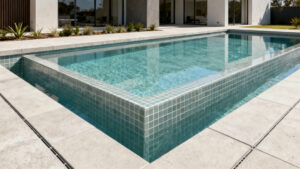
Interior finishes, coping, and surrounding areas are completed to give the pool its final appearance and usability. The pool is then filled, and initial system adjustments are made to ensure everything operates as intended. At this point, the pool moves from a construction project to a functional environment ready for use.
Managing the journey from concept to completion
Delivering a custom pool requires more than completing individual stages. Whether you choose a concrete build or one of our fibreglass pools, it requires coordination across the entire journey, including creating a complete outdoor pool and spa experience.
Coordinating design, construction, and technical decisions
When design, structure, systems, and finishes are treated as separate tasks, compromises often appear. Coordinated management ensures that decisions made early continue to guide the project through construction and commissioning. This alignment helps preserve the original intent while responding to site realities as they arise.
Why late-stage spa additions often undermine the original design
Blue Pools and Spas manages custom pool projects as a single, continuous process. From initial design discussions through to construction, system installation, and handover, the focus remains on control, clarity, and long-term performance.
By handling the full design-build journey, Blue Pools and Spas reduces fragmentation and ensures the finished pool reflects the concept that shaped it from the start. Discover more expert advice in our pool building blog.