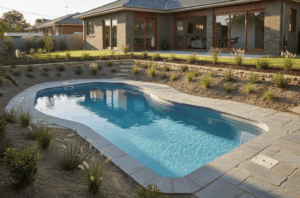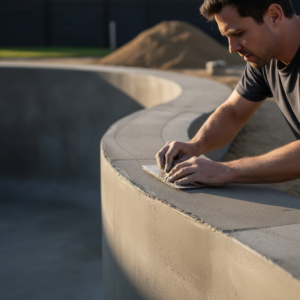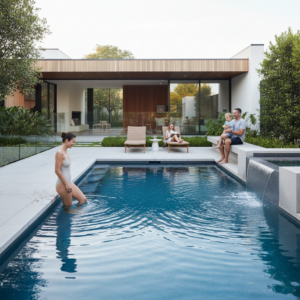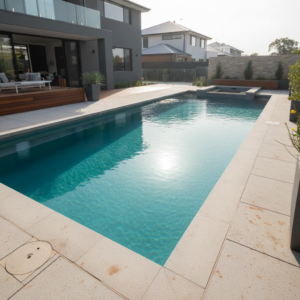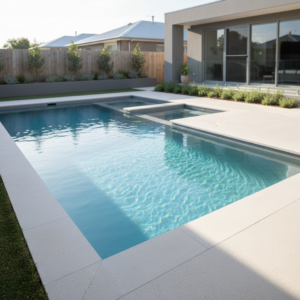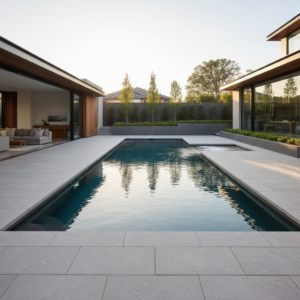


A truly successful pool and spa environment is not defined by individual features. It is defined by how those features work together spatially, technically, and day to day. When a pool and spa are conceived as separate elements, the result often looks acceptable but feels compromised in use. A complete outdoor experience, by contrast, is designed as a single system from the outset.
This distinction becomes especially important in Melbourne, where climate variability and site constraints place greater demands on design coordination, particularly for high-end concrete pools in Melbourne and integrated spa systems.
Designing the experience before designing the pool
Before any decisions are made about shapes, the most important question is defining the custom pool design-build process. A pool and spa that look impressive on paper can still fall short if the user experience hasn’t been clearly defined first.
How people actually use a combined pool and spa space
In practice, pools and spas are used very differently. Swimming tends to be active and social; spa use is slower, quieter, and more temperature-sensitive. When these uses are not considered early, the spa can end up poorly located, visually disconnected, or awkward to access.
A complete experience considers movement between zones, supervision of children, proximity to the house, and how the space works both during the day and in the evening. These behavioural patterns inform layout decisions long before construction details are finalised.
Why late-stage spa additions often undermine the original design
Adding a spa after the pool design is already resolved is one of the most common sources of compromise. Late additions frequently lead to hydraulic limitations, mismatched finishes, awkward levels, or inefficient heating solutions.
From a performance perspective, retrofitting a spa can also force equipment upgrades or operational trade-offs that could have been avoided with integrated planning. Designing both elements together allows the pool and spa to function as one coherent system rather than competing components.
Spatial decisions that define comfort and flow
Once the intended experience is clear, spatial decisions determine how natural and comfortable the environment feels. These choices influence not just aesthetics, but safety, accessibility, and long-term usability.
Pool and spa positioning within the outdoor living area
The relationship between the pool, spa, and surrounding outdoor spaces matters more than their individual forms. Positioning affects sightlines from the house, wind exposure, noise transfer, and how inviting the space feels throughout the year.
A well-considered layout ensures the spa feels connected without dominating. This spatial harmony is essential whether you install a custom shell or one of our premium fibreglass pools in your outdoor area.
Levels, transitions, and finishes that make the space feel intentional
Steps, ledges, and changes in level are where many pool and spa designs either succeed or fall apart. Poorly resolved transitions can feel abrupt or unsafe, while well-designed ones guide movement intuitively.
Finishes also play a role beyond appearance. Surface texture, colour, and continuity between pool and spa affect heat retention, visual calm, and how unified the space feels as a whole.

The technical systems that make it work day to day
Behind every seamless pool and spa experience is a set of technical decisions that rarely receive enough attention. These systems ultimately determine comfort, reliability, and the effort required to maintain water quality over time.
Circulation, filtration, and hydraulic planning for pool–spa combinations
When a pool and spa share infrastructure, hydraulic design must be carefully balanced. Flow rates, pipe sizing, valve configuration, and pump compatibility all affect how efficiently water circulates between zones.
Inadequate planning at this stage can lead to uneven heating, poor filtration performance, or operational complexity that becomes frustrating for owners over time.
Heating and water treatment choices that affect usability and upkeep
Pools and spas operate at different temperatures and usage patterns, which places specific demands on heating and water treatment systems. A solution that works for one may be unsuitable for the other if not properly integrated.
Thoughtful system selection allows both environments to perform as intended without excessive adjustment, chemical fluctuation, or energy inefficiency.
Designing for access, cleaning, and long-term performance
Maintenance considerations should be resolved during design, not after handover. Equipment access, cleaner compatibility, and service clearances all influence how straightforward the pool and spa are to operate in the long term.
Designing with these realities in mind avoids unnecessary complexity and helps preserve water quality and system performance year after year.
How a complete outdoor environment is delivered in practice
Bringing all of these elements together requires coordination across design, engineering, construction, and commissioning. This is where an end-to-end approach becomes critical.
Making equipment and construction decisions with the long term in mind
Rather than focusing on short-term appeal, equipment and construction methods are selected based on durability, compatibility, and realistic operating expectations. This includes avoiding bottom-of-range components that often introduce reliability or maintenance issues later.
By aligning construction quality with the right pool equipment from the outset, the finished environment is easier to maintain. For more design tips, visit our pool building blog.